
 Act 1Above the surfacePlay the act →
Home / The overview
The overview of the paper SaaS architecture when code is cheap
Transcript
Overview
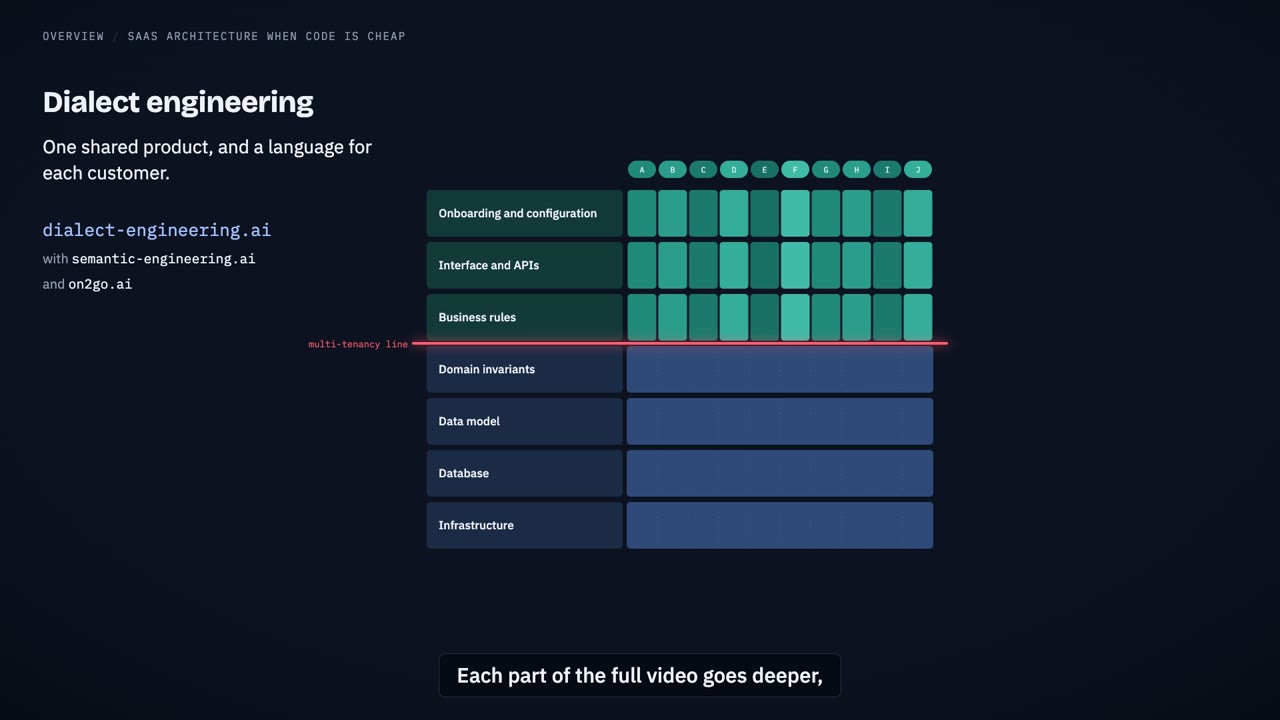
SaaS architecture rests on one premise: writing the code is the expensive part. So products share every layer they can, and draw the line between shared and per-customer as high as it will go. When a customer needs something the configuration did not anticipate, the quick answer is a special case in shared code, and every tenant carries it. Coding agents are now reported building whole applications end to end. If code is no longer the expensive part, the line can move. Customers want to start without a project measured in months, change things easily after go-live, personalise down to the individual user, and have their own agents operate the product. Beneath every customer's variation sit the domain invariants: the entities, calculations and relationships every customer shares. The product's knowledge graph already records them. Put a language on top of them. The invariants are its vocabulary, and its grammar says how each customer's business rules may combine them. The line moves down to sit on the invariants. An agent writes each customer's rules in that language from what the customer asks for, and a validator, tests and a compiler check them before anything reaches the product. An existing product can start at the top, with onboarding, which leaves the product's code untouched. That is dialect engineering: one shared product, and a language for each customer. Each part of the full video goes deeper, with the paper's sources.
Go deeper
The full video in five acts, one act at a time.


