
Home / Pick a layer / The bill
The bill, today and after the multi-tenancy line moves
Transcript
Scene 10: The bill
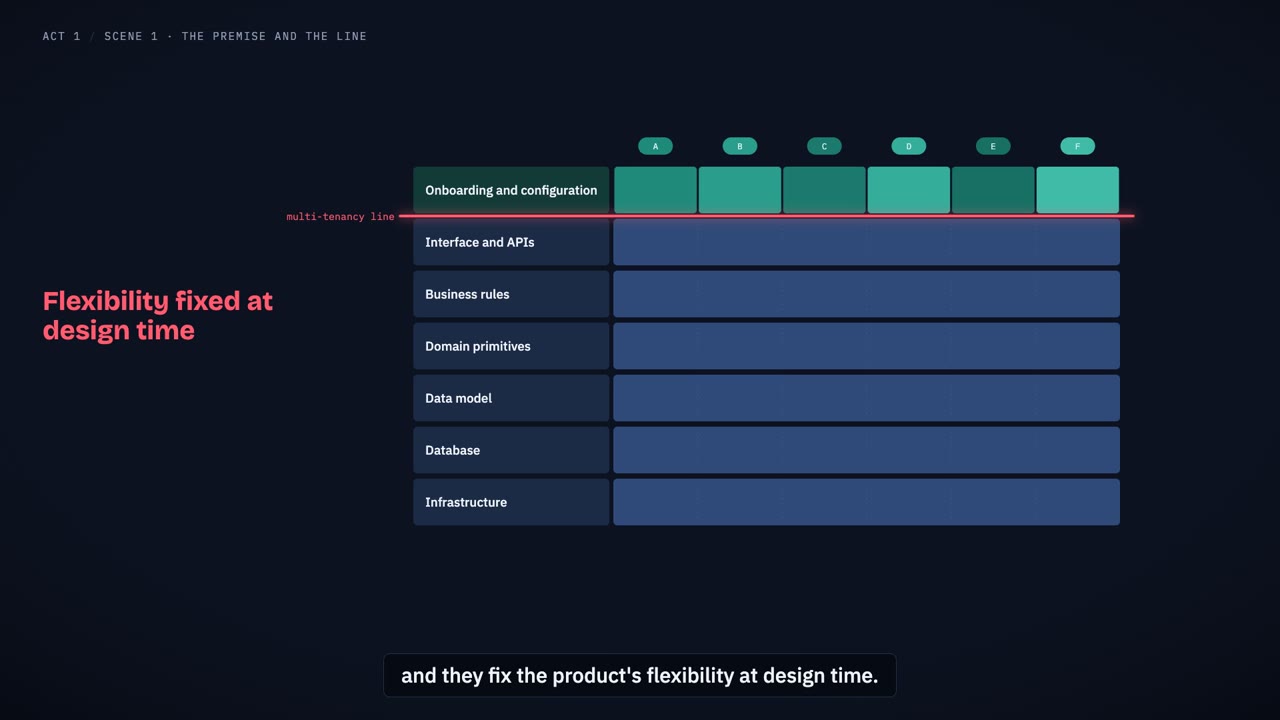
At the end of the customer's journey is the bill. The customer buys a tier, and the tier bundles a common set of capabilities, whether this customer needs them or not. The provider is under pressure on the bill too, as seat-based pricing loses ground and agents take on work that users used to do. The pressures on the customer, all the way down, trace back to the same line, drawn high because code was expensive. Which brings back the question. What should stay shared, and what is the product really selling?
Scene 23: the bill
The journey ends, as it did before, with the bill. The customer's domain document is, in effect, a bill of materials: the capabilities this implementation uses, and how they are put together. The price can follow the customer's document, the way modular physical products are priced: a price for each capability used, plus the work of assembling them for this customer. Packages for common scenarios, priced on their value, sit beside the components. Because the price is computed from the same document the compiler validates, the quote and the implementation cannot drift apart. Assembly becomes a visible, priced service.
Go deeper
Choose a layer of the product and see it today, then after the line moves.
Per customer once the line moves Shared by every customer