
Onboarding is the first layer to move because the product itself does not change. Today requirements are mapped by people onto configuration that nothing checks; a validated language changes the economics of the process that gates every sale.
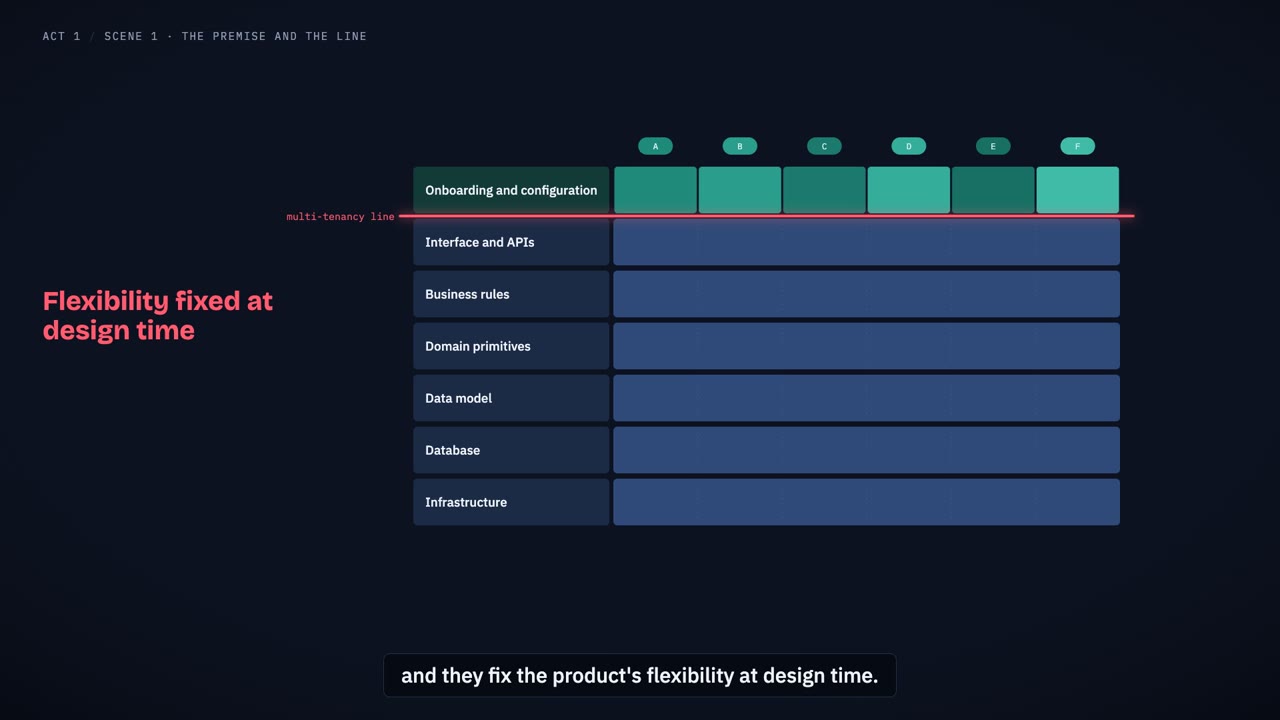
Onboarding is the easier of the two top layers, because the product does not change at all. The user interface stays as it is, the business rules stay as they are, and the work is confined to how a customer's stated requirements become a valid configuration.
Today that translation is performed by people reading documents and filling in a spreadsheet or a sequence of setup screens. The spreadsheet has columns, naming conventions and implicit rules, which makes it a language already. What it lacks is anything that checks the result. The person filling it in has no way to know whether what they wrote produces the behaviour the customer described, and the error surfaces downstream, often after go-live.
Onboarding is a sequence of steps. Vendor implementation methods describe gathering requirements, mapping them to features and configuration, building and extending, testing, migrating data, and training people before go-live (Success by Design, Microsoft, 2026; ERP implementation in six phases, Panorama Consulting, 2019). Each step works from its own artefacts, such as spreadsheets, setup screens, configuration files, migration scripts and training material, and each depends on the same understanding of the domain.
Replacing that with a validated language leaves the product untouched and changes the economics of the process that gates every sale.