
For an existing product the recommendation is about sequence: avoid a screen-by-screen programme, invest in the grammar and compiler, take onboarding first, and use any planned re-architecture to design the lower line in.
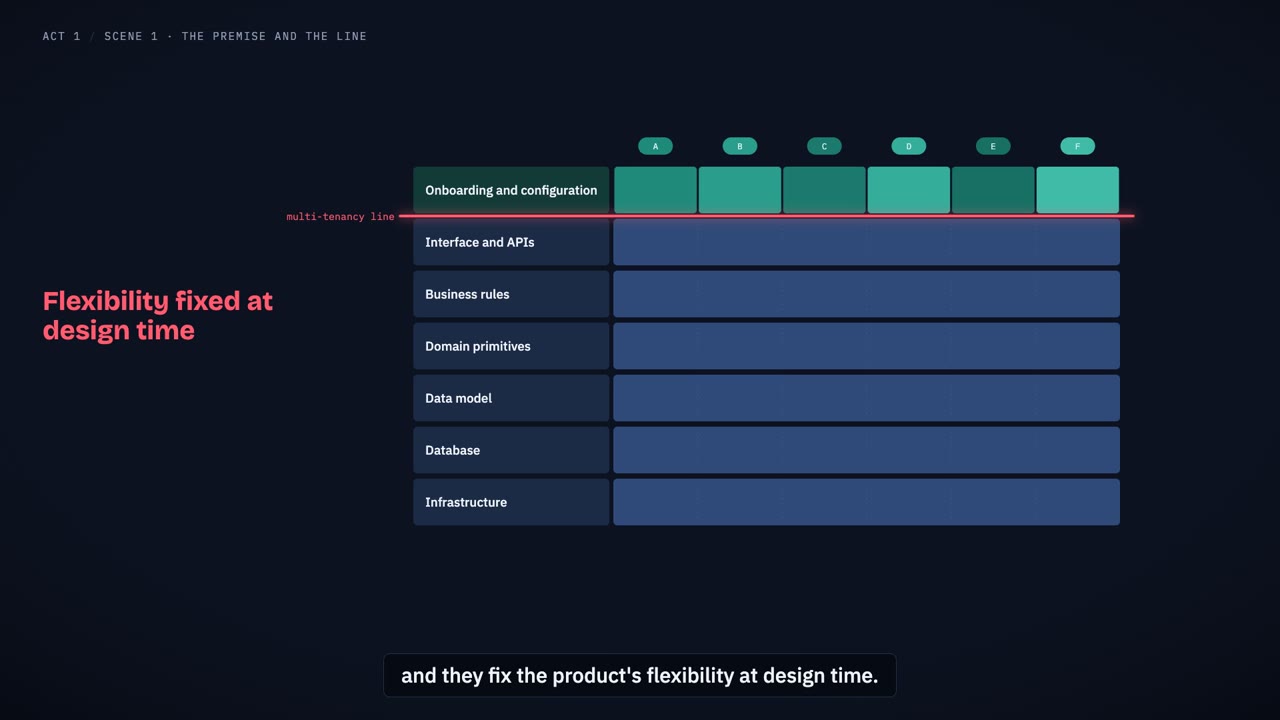
The practical recommendation arising from this analysis is about sequencing.
Do not staff a conventional interface modernisation programme now. If the vertical route works, most of the horizontal route's cost is avoidable, and work done screen by screen will not carry over. Where an interface is unusable enough to be losing deals, fix those screens and no others.
Put the effort into the grammar and the compiler instead. These are the durable assets. The grammar encodes the mapping from customer requirement to product capability, which is the knowledge currently held by the small number of people who know how to configure the product. Formalising it is the point of the exercise.
Take onboarding first. It touches no product code, and the value is measurable in cycle time on a process that gates revenue. Where the product already accepts configuration as data, the language compiles to that.
Treat a planned re-architecture as the place to design the lower line in. A company already planning to rebuild the layer that applies configuration has an opportunity, because that rebuild is where a lower multi-tenancy line can be designed in rather than retrofitted. Developing the grammar in parallel tells the rebuild what it will need to accept.